The Rhythm Project – All Rhythm Stems From Movement

I have just stumbled upon a fascinating video, as one does on Youtube, all about how the rhythms of daily work in tribal Africa is based on rhythm, and how that is then translated into music and dance.

We see village women working at the normal daily tasks in such communities, and their men also, all demonstrating the obvious benefits of working rhythmically.   We also see several of their musical instruments being created, in the case of a sort of drum, we see the tree it is made from being felled (rhythmically) and then the entire process of hollowing it out, stretching the skin and so on….  All done in a sensible rhythmical manner.

Beautiful people by the way.

We then see how all of his translates into music and dance – amazingly.

All in all a fascinating short video with a very important message – we need to recognise the importance of rhythm and movement in our lives, and should ensure that we do not stray too far from these important basic human needs.

So, here is the video for you to watch, a good way to pass about 10 minutes of your day I feel.  Enjoy it, and take the message onboard please.

Please ignore the “Copyright Protected” message at the start of the video, not sure why it is there as they want as many people as possible to see their video, so watch it with a calm mind.

Share with us:

Let me know what you feel about this video and its message, I am intrigued to know if you guys found it as important and enjoyable as I did.

How To Survive In A French Village

When we got to Fontenoy le Chateau ( a small village in the low Vosges) in 1997, we knew absolutely no one, and to be honest we had moments of wondering what on earth we were doing, coming to a small community in a country we really only knew from holidays (and in my case, a rather large number of relatives clustered in Paris and around Lyons).  We did more or less speak French, and had gone to a lot of trouble to try and find out about banking, bureaucrats and other “official” things.  But simply living, making friends and becoming part of the community, well that was quite a different set of problems.

 A short video to give you an idea what Fontenoy looks like

After we had been there for a few months, I became aware of the existence in the village of what in France are called “Associations”, which are groups of people who have got together, formed a club of sorts in order to pursue some common aim.  These Associations have a legal existence and are all properly registered in the head office of the Departement, which in the case of Fontenoy meant Epinal, a nearby city of some 100 000 souls.

Anyhow, I thought that by joining one or more of these Associations, I might be able to sort of break into the village community and become part of the daily life there, and almost more importantly, make some friends.

In the event, I achieved all those aims and much, much more, and ended up being a very central part of the life and soul of Fontenoy along with a fair number of other highly active (both physically and organizationally) local citizens.

Thus I first joined an Association with the resounding name of Des Amis du Vieux Fontenoy, which devoted itself chiefly to the restoration of the ruined 11th Century castle that explained  the “Chateau” part of Fontenoy le Chateau’s name.

This restoration mainly consisted of keeping the grass and weeds in and around the very thoroughly ruined castle under control, and organising a student work camp each summer holiday, where students came, lived in one of the remaining sections of the medieval wall that used to surround Fontenoy and slowly carried out a mix of archeology and restoration work on the castle.. But to be honest, this is really a 100 year project as the castle was very big in its hey day, and is pretty conclusively ruined now.  And most of the stones that originally constituted the castle have over the centuries been stolen and used to build the houses in Fontenoy itself.  Including the imposing church too, by the way.

And whilst the more fanatical members of the Association were fully prepared to demolish all those houses and even the church to get the castle’s stones back, there was a certain reluctance on the part of the good citizens of Fontenoy to allow that to happen.  Stalemate thus.

Actually the castle became a ruin not by the jaws of time, but was captured by, of  all  things, a Swedish army that happened to be operating in that area during the 100 years war, and who upon capturing the castle, forced the good burgers of Fontenoy to pretty conclusively demolish the castle.

When I joined this Association, it’s Chairperson was the highly energetic and impressive Veronique Andre, a good soul who became a very good friend over the roughly 10 years we spent in Fontenoy.   Vero, being the sort of person she was, I also found very much in evidence in the several other Associations I joined shortly after becoming active in the Friends of Fontenoy.

In the course of my Fontenoy period, I was a very active member of as above, the Friends of Old Fontenoy, also of Les Amis de L’Ecole, an association who busied themselves chiefly with fund raising for the local primary school in the village through all manner of events, chief being the now famous all over France Feu de St. Jean and making and processing the float for Saint Nicholas on 5th December every year, and last but by no means least, sending that float to the Carnival procession in the nearby town of Bains les Bains where all the local villages and small towns processed through the town on their various floats with bands and all other good things as part of the Catholic Carnival (Mardi Gras).

The creative and organisational driving force in that association in those days was another truly good friend of ours, Jean Pierre Remond, who was a real jack of all trades, could design constructions superbly, understood the mechanics of large constructions, and was a very good organiser of labour and material suppliers too.

Being of a creative bent I also joined the Association called Village de l”Ecrit, which as its name would suggest, busied itself with all manner of literary matters, including giving an annual prize to what their jury considered to be the best book of the year written by a Vosgean writer.   Sort of local equivalent of the Booker Prize really.

This one was lead by an equally energetic soul, the good Michou, who used to be a teacher but was by then retired.  She also became a pretty good friend over the years I worked with her for that Association.  This work consisted mainly of creating an enormous number of plywood “Speech Bubbles” each year on which we carefully painted quotes from all manner of authors, in French (of course) but also in honour of the considerable number of Dutch folk in the area, and who passed through on their holidays, in Dutch and as a sort of small gesture to those Brits, such as Lotty, Roger Oscar et.al who were hanging around, in English.  And occasionally in German too.  Particularly the heavier and darker of the Germanic philosophers.

These we hung up all over the village, so almost every house, shop and public building had at least one of these panels decorating it for the entire summer.   It is indicative of the cohesive nature of such a village that everyone was very happy to have one or more of these panels hanging on their house or fence, and as Michou, Daniel (another village stalwart who became a real friend over the years) and I hung these panels, we had long and enjoyable conversations about the quote that was being hung up.   Like all good villagers all over the world, most people in Fontenoy always had time to stop and chat.

Occasionally this could be mildly irritating to me, as they were perfectly happy to do this when driving their cars through the village going in opposite directions, if they came upon each other, they would cheerfully stop, blocking the road completely and chat amiably away for a quarter hour or more… And no one worried.

People around there lived very long lives by and large.. And I suspect that this very relaxed approach to life had a lot to do with that.  That and the way they always recognised each others existence.   Walking though the town could take time, as one had to greet almost everyone by name, and at least pass a couple of minutes discussing the weather or whatever… I liked this a lot.

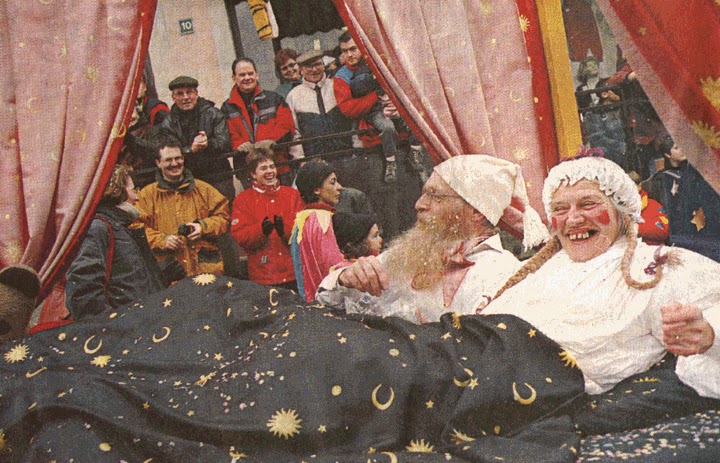
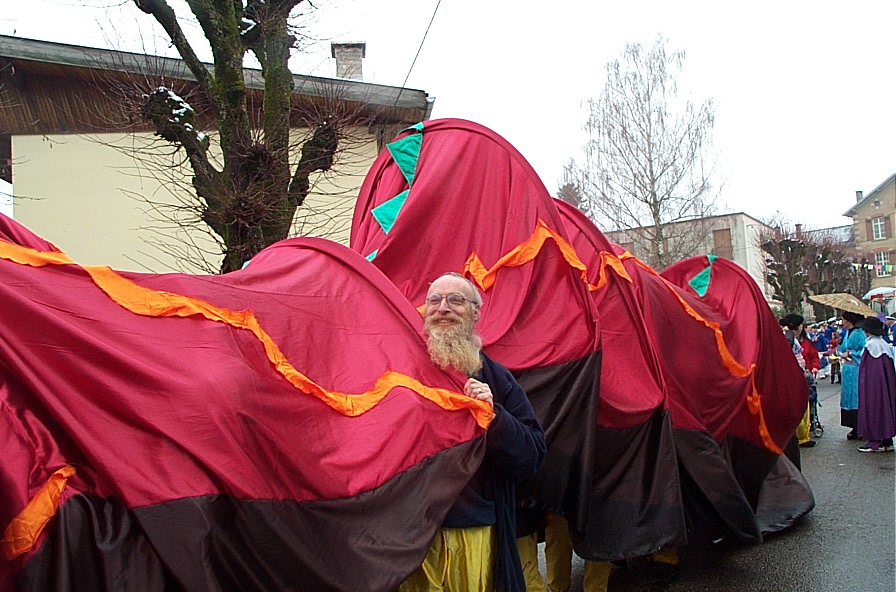
The procession of floats through Bains les bains each year was a sort of social high point in the wider area around Fontenoy.  As I said above, all the local villages built some sort of a float for this very important and much loved event in the yearly calender.   I took part in this for most of the roughly 10 years I lived in Fontenoy, dressed in a variety of costumes appropriate to that year’s float.   One of my favourite ones was when I was pulled behind a tractor in a huge double four poster which I was sharing with a splendid old lady, who was notably short of teeth, called Antoinette.   Rural France is remarkably prudish sometimes, and the sight of the two of us happily in that bed pleasantly scandalized the public who stood beside the road as we passed by….  I was teased about my romantic and erotic involvement with Antoinette for many years after that one.  Another very happy memory, and Antoinette was a simply delightful woman to talk to, and as I discovered, to share a bed with….   Even if all we did was talk to each other.

Daniel and Gerard ready for Carnival

Antoinette and I in the famous four poster

 Me lurking beside a Chinese dragon one year

Anyway, by means of my very active involvement in the Associations in Fontenoy, and by being prepared to help anyone who needed a bit of help – going up onto the forest to gather their allocation of winter firewood, helping repair a roof, whatever was needed, I rapidly became accepted as one of them, a real honour I felt.

In the course of all of this, I made some extremely good friends, as Fontenoy seemed to have more than its share of good hearted people in it.  People such as Gerard, who used to own the one garage in the village, and was a rather rotund and red faced but utterly likable and reliable man, all the various active members of the Associations I belonged to.  Also there was Roger (Monk) Llewellyn-Smith and Marion his wife who arrived after us, and who became great and important friends to us, which they still are.. And of course Jean Pierre’s wife, Marianne.  The list of friends we made there is simply too long really to put here, but there were many of them.. and the friendships we made mattered to us, and still do in many cases. Actually while Fontenoy had its less pleasant inhabitants, as everywhere does, the great majority of the people there were actually remarkably pleasant and friendly to us.

When it came time for us to leave France and go off to work in Angola, I was given a surprise farewell party and honour  in the town hall.   How they managed to keep that a secret from me was a minor miracle, as in such a village, the saying that “if you dropped your hammer at the eastern end of the village, people were talking about it at the western end before it had even got to the ground” really did apply.

Anyway, I was sort of tricked into going to the town hall that night by Oscar, who told me that there was a special meeting of the town’s folk to discuss something or other of importance, which I should take part in.  So as he had grabbed me while I was still working, I was in my dirty work clothes when we arrived at the town hall, and I was surprised to see that just about everyone I knew in the village was there, all dressed in their Sunday best.

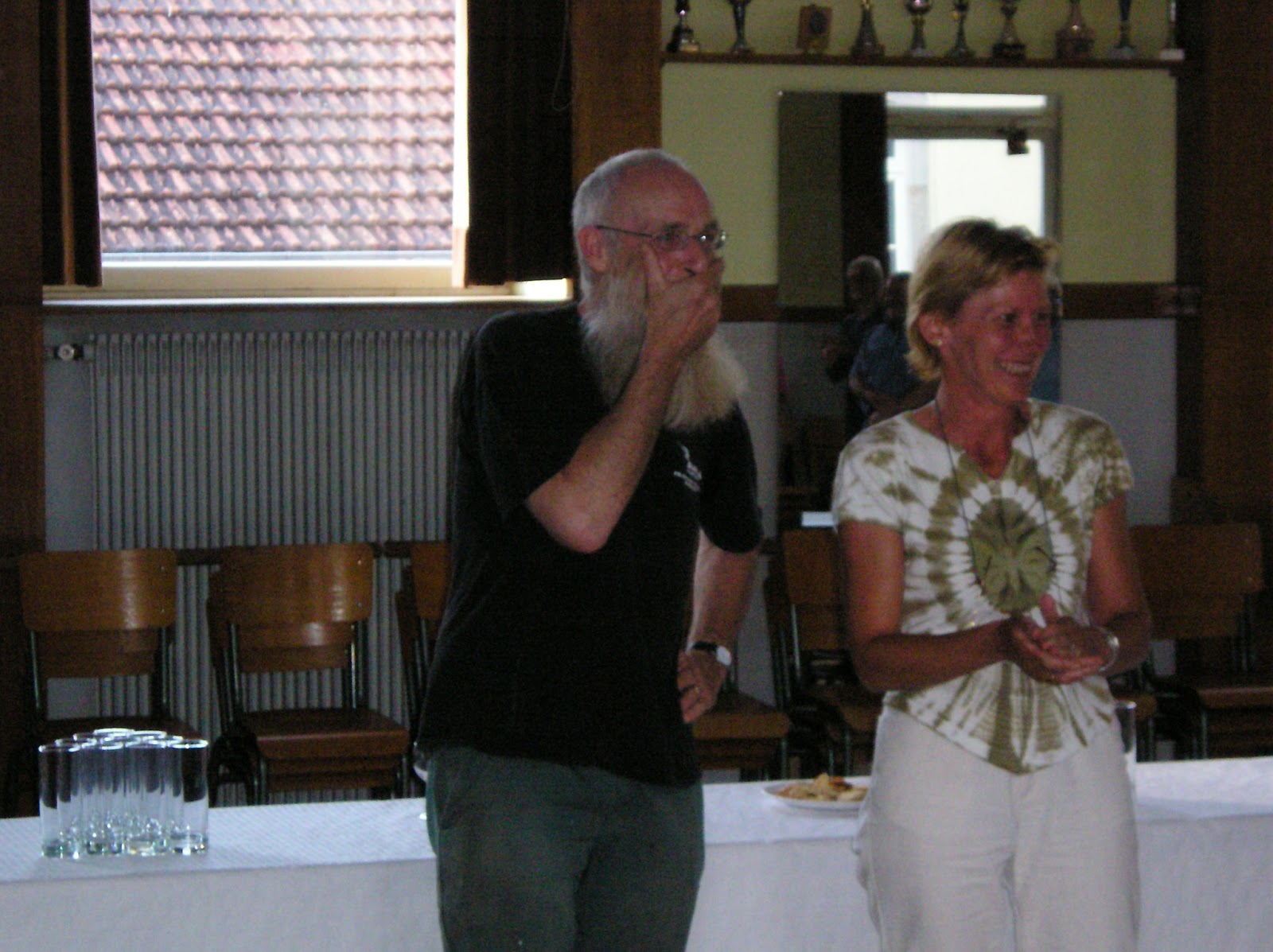
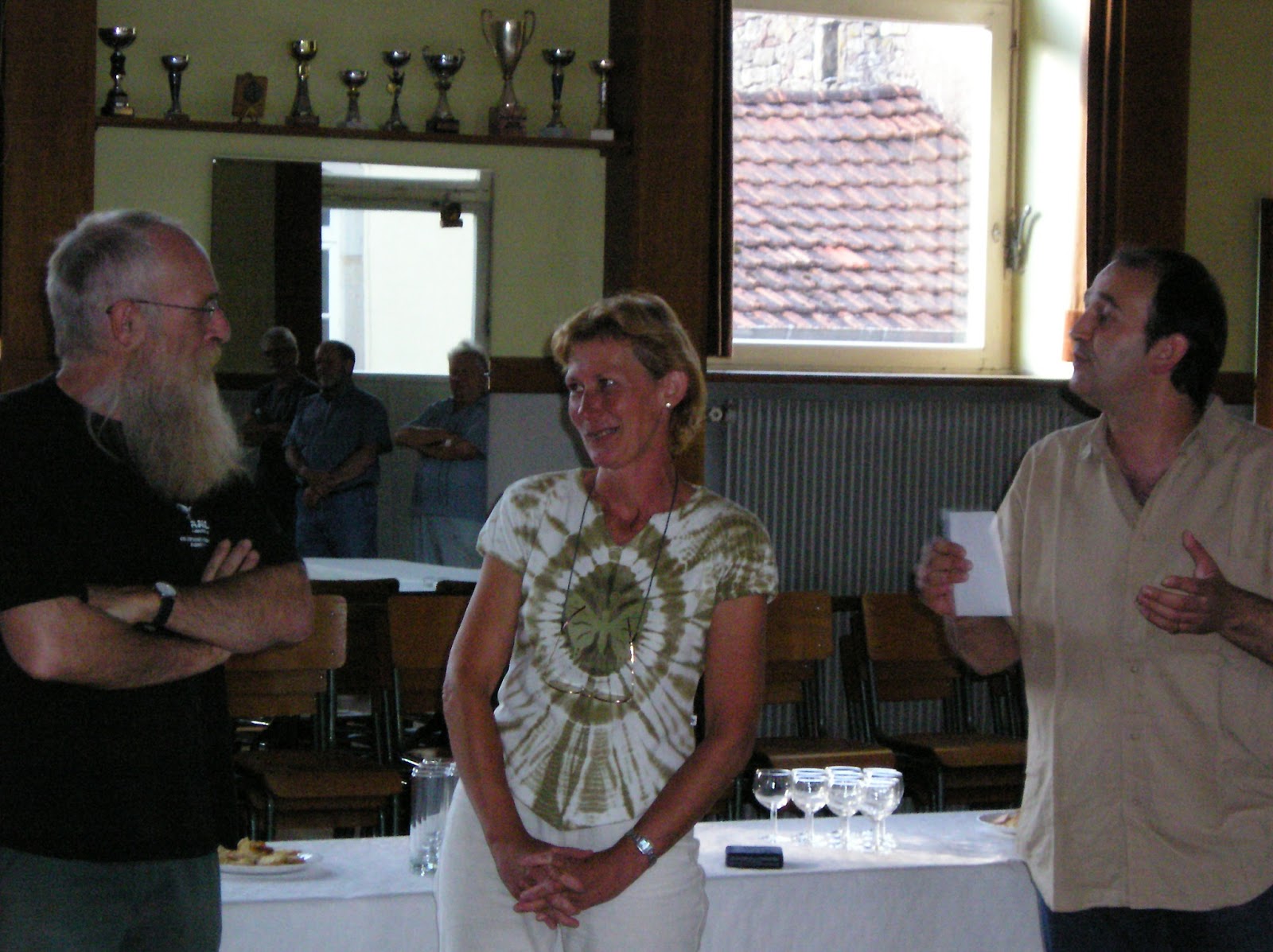
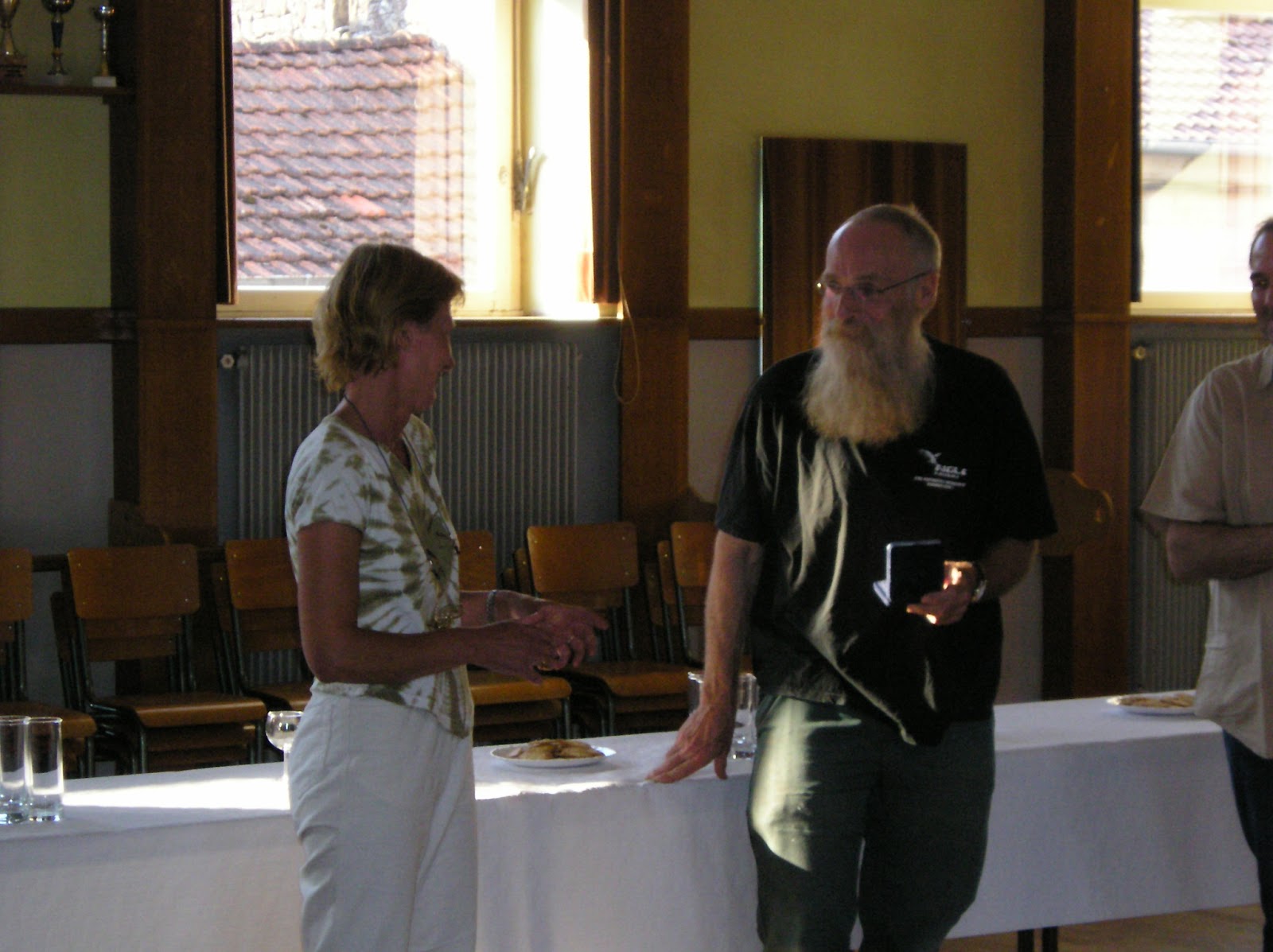
On entering the hall I was grabbed, pushed out to the front, and the good lady Mayoress – Francoise – started to make a speech aimed at me….  And to announce that I was to be given the Fontenoy Medal – and honour that Fontenoy had instituted to show appreciation to people who had really contributed in a very notable fashion to the community in some way or other…And that apparently was me!

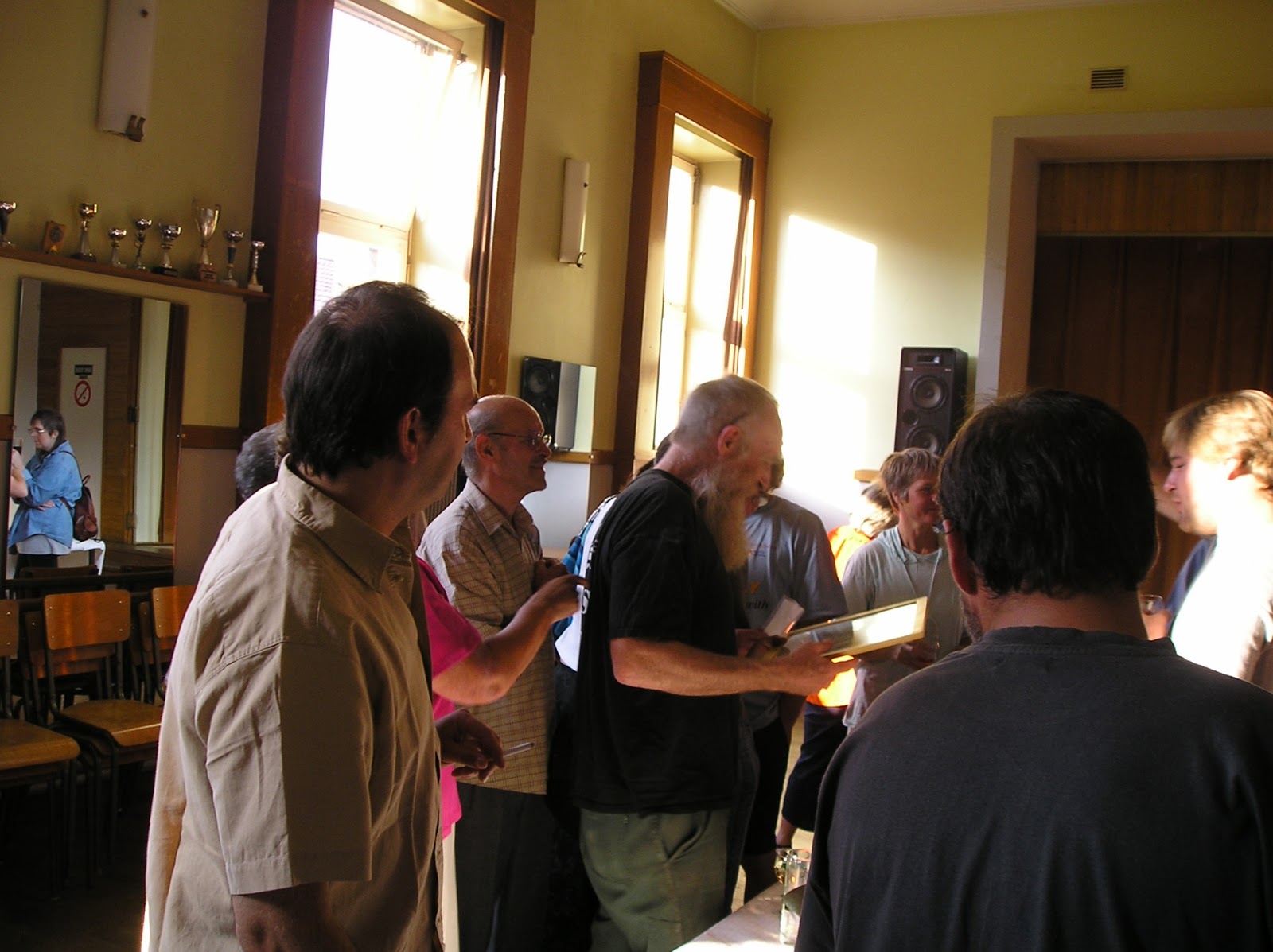
After which a number of friends made speeches extolling my many virtues (in their eyes at least).   I was totally overcome by the entire thing.  Never having been at the receiving end of such public acclaim in my entire life.  I was also doubly honoured by the fact that I was not a native of the village, and not even French for God’s sake, but of all things, an Englishman….!

I am overwhelmed as The Mayoress tells us all how wonderful I am…

Not sure I believe what they are saying about me

An astonished me, with the Fontenoy medal in my hand.  Note that I am leaning on the table. I needed to.

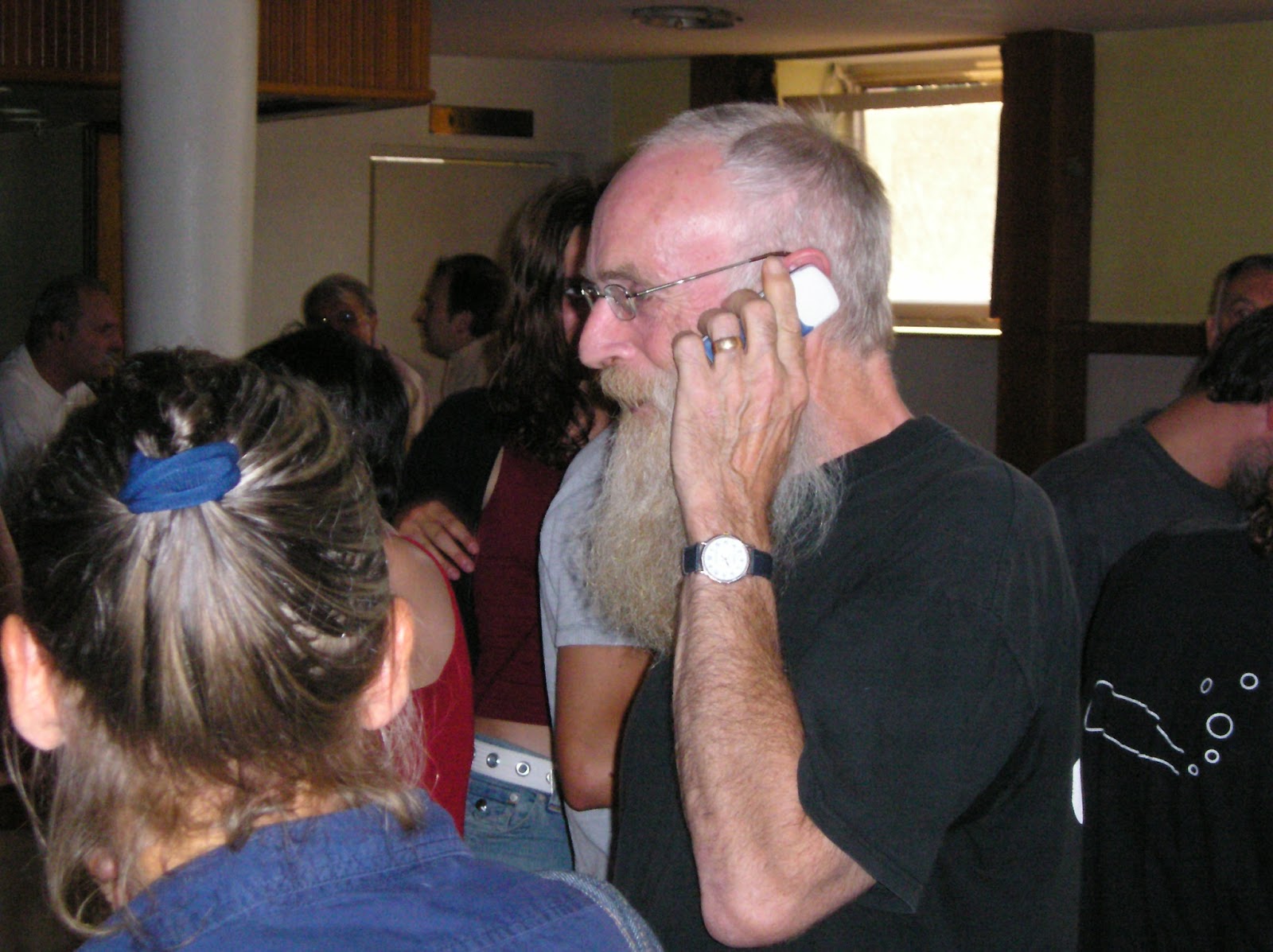
Lotty was working in Geneva at the time, so it was arranged that she would phone during the ceremony to give me her thoughts as well…

That is  a memory I will cherish for the rest of my life.   It had real significance to me, as I truly loved Fontenoy, those people who had befriended and helped me while we were there and I was actually very sad to be leaving a place in which we had invested so much work, thought, dreams and hopes.   But, that party at the end was amazing, wonderful and unforgettable.

Continue reading “How To Survive In A French Village”

Soulful Music And Amazing Images

I have just come across a video that combines two amazingly creative forces in one work of art. The extraordinary photos of Steve McCurry with the haunting Duduk playing of Levon Minessian.

Together, the overwhelmingly sad look in the eyes of most of McCurry’s subjects and the equally sad sound of that most evocative of instruments, the Duduk work together to make a document about the less happy side of humanity and life.

Occasionally among the haunted look in the eyes of most of his subjects, there comes a soul that is happy, full of joy, or a landscape that is simply peaceful and gentle, but most of the images are as the famous one of the Afghan Girl.

afghan girl

Along with these images, we have the music of  Armand Amar, a piece called Amen Hayr Sourp  (Canticle of the Trinity)

A truly heartbreaking image of a small Peruvian kid…..

Continue reading “Soulful Music And Amazing Images”

My Pig – Humber Armoured Personnel Carrier

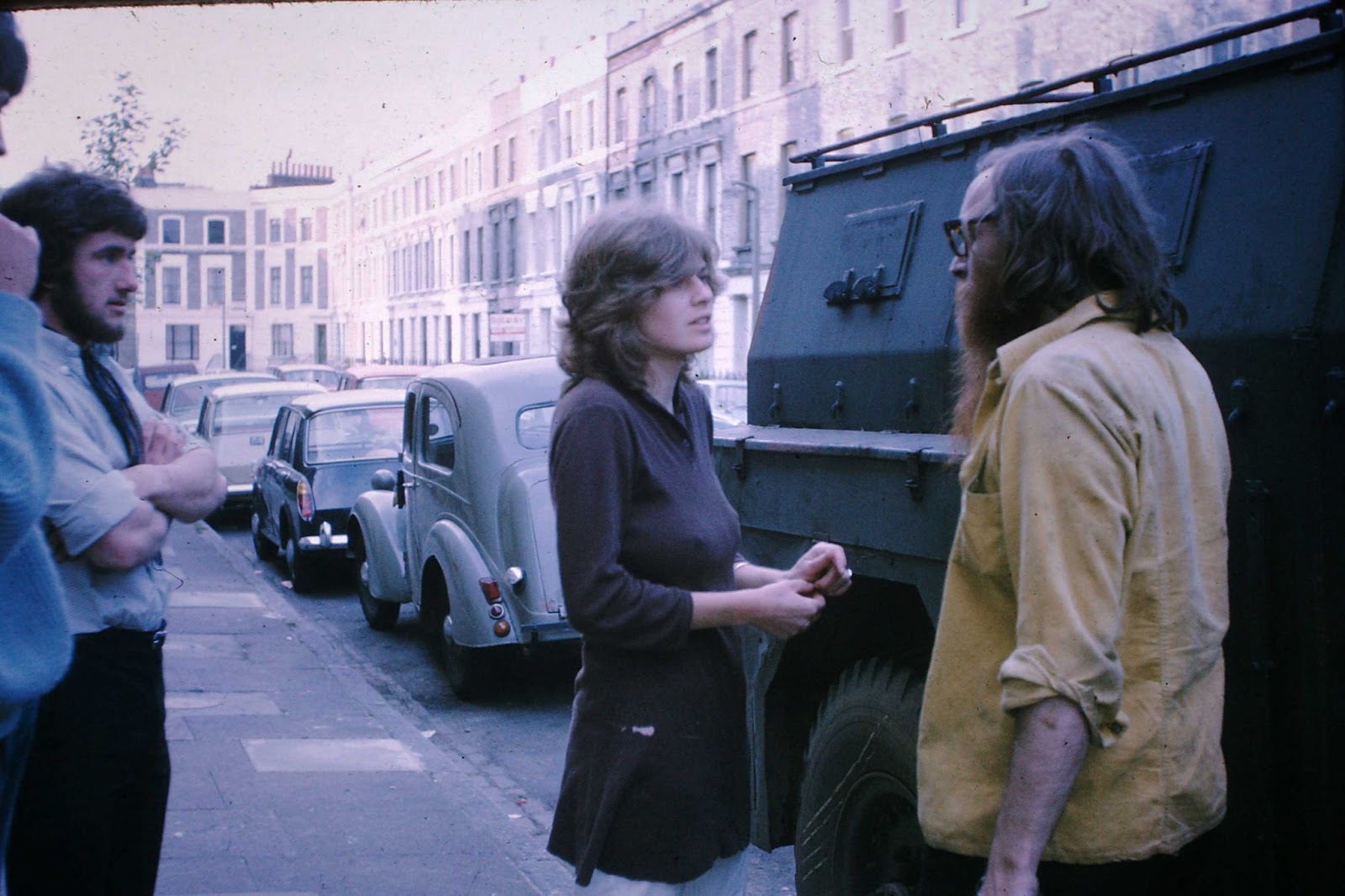
Many, many years ago I was the proud owner of a 7 ton chunk of armour plate, affectionately known in the British Army as a Pig, or more formally as Humber Armoured Personnel Carrier.

This splendid vehicle boasted a completely waterproofed 4.75 Rolls Royce petrol engine (and by waterproof, I mean the entire engine was encased in a sealed steel box, with the various lines (fuel, air and exhaust) passing out through one way valves.   So when one opened the bonnet, a tricky job in itself as it was made of thick bullet proof steel, one was confronted with a large, rounded pale green steel box, and no engine to be seen…

0ea4c-pig-05

Curiously enough, it only had one set of gear ratios, no low gearing as one would expect to find on any vehicle that was designed to go off-road, but the engine was so powerful, and 1st gear so low, and as it was always in 4 wheel drive, it went perfectly happily over mud, small rivers and so on on its enormous “run-flat” tires.

0835c-pig-04

Inside it was remarkably spartan, no unnecessary comfort for driver or passengers, and of course, being military, no seat belts to be seen.

Anyhow, you can find the specs for this small monster easily enough on line, so I shall stop going on about that side of the thing, and talk about what it was like to own and drive around in such a vehicle.   It was in effect my car, as I had no other vehicle at the time, so I used it to drive to work every day, and to drive around at the weekends too.  As one would in a normal car.

Continue reading “My Pig – Humber Armoured Personnel Carrier”

Angola Minefields – Look Innocent, But Will Bite You!

While we were working in Angola a few years ago, we had friends who worked with the Halo Trust clearing landmines all over Angola.  At that time (2006) there were estimated to be about 17 million of the horrible things lurking in the ground.

We were invited to visit them at their upcountry headquarters in a small town called Huambo, which had suffered very badly during the civil war, so was full of shot up buildings, burnt out tanks in back yards and all the remains of a vicious war, which after a bit of time in Angola, we were becoming all too familiar with sadly.

No gnomes but tanks
No gnomes but tanks

They decided to first take us to a large minefield that they were busy clearing on the edge of a small village nearby, so off we went to see our first minefield in the flesh as it were.  When we got there we were taken to the edge of the village, where the local school had its playground and the guy in charge pointed to the grass field beside the kid’s playground and told us matter of factly that that was the minefield.   Simply a large area of grass beside the beaten earth of the playground…  No form of separation, walls, fences, ditches.. nothing, simply an innocent looking grassy area.

This was when we understood that actually a minefield is simply a chunk of land which happens to have landmines buried in it….  In no way special or dangerous looking.   As a friend from the Halo Trust put it, a landmine is the Beast that doesn’t bark – but sure as hell can and does bite!

The thing that got me at that moment was the realisation that the kids at the school played football and ran around as kids do, right on the edge of a minefield, with no form of barrier to prevent them running into the minefield.

Continue reading “Angola Minefields – Look Innocent, But Will Bite You!”

WE VISIT THE FIRST OIL FIELD IN ANGOLA

Some years ago, Lotty and I worked in Angola, arriving about three months after the 30 year civil war had ended, and found ourselves in a ruined country, in which travel was tricky to put it mildly.  However, we were invited one day to go and look at the very first oil source in Angola.

This trip was organised by a couple who had been in Angola for a very long time, and both of whom worked in the oil industry there, as do almost all non-Portuguese expats.

Four of us from the International School of Luanda (where we worked) went on this trip, which meant leaving the school at 6:15 am! After recovering from this early start, we rumbled through a surprisingly active Luanda (This was a Sunday morning, by the way) to a section of Luanda called Mirimar, which I have never visited before, and appears to be the part where the rich and Embassies have their being… streets of very expensive looking houses, and the sure sign of wealthy people, lots of broken car window glass along the pavements (the Break the Window of the BMW and Steal Everything from Inside it syndrome). From here, we had a superb view of the port of Luanda, but we were warned not to take any photos of it, as it is considered to be a security risk if someone such as I should happen to have any snap shots of mountains of containers and lots of rusty ships… oh well……

Anyhow, there were about 50 of us, spread over some 25 huge 4×4’s, and after a short lecture beside the road about what we were going to see…… Off we headed, in a most imposing convoy.

It would have made the Mayor of London happy to have seen us, all those 2 ton SUV’s roaring along a perfectly good road. Oh well, you are nothing around here if you don’t have a monstrous 4×4.

We were heading north of Luanda, to a part of Angola that neither Lotty or I have yet seen, so we were very curious about what it would look like. It turned out to be flat….extremely flat, which is one reason there is oil to be found there… the land there is made up of sedimentary rocks, which are soft, and thus weather easily, unlike the granite which makes up about 90% of Africa (We were told all of this by the guy organising the trip).

Anyhow, we rumbled along happily in our convoy, causing people in the various villages and small towns we went through to wonder what the hell was going on, reasonably enough…. we were the event of the day for a lot of them, I reckon.

After a while, we stopped at a bridge over one of the regions main rivers to admire the view across the flat country to the mountains in the distance, but were warned not to stray too far from the cars, owing to the recently discovered presence of landmines all around this bridge (I was worried about how they had discovered them!) We sort of stood nervously around, taking photos of each other for a while, whilst the leader of our intrepid group told us a wee bit of war history, relating to this bridge and road. It seems that owing to the marshy quality of the land in this part of Angola, the only way for tanks to get across it was via this road and bridge. As the enemy (FNLA) neared this bridge, the gallant defenders of Luanda (MPLA) had posted a whole group of Stalin Organs (Multiple rocket launchers mounted on trucks) on top of a nearby ridge with the intention of blowing the FLNA tanks and soldiers to hell and back as they neared this bridge along the road. However, there was one problem… No one had a clue how to use the things!

Continue reading “WE VISIT THE FIRST OIL FIELD IN ANGOLA”
Amazing And Intriguing Image

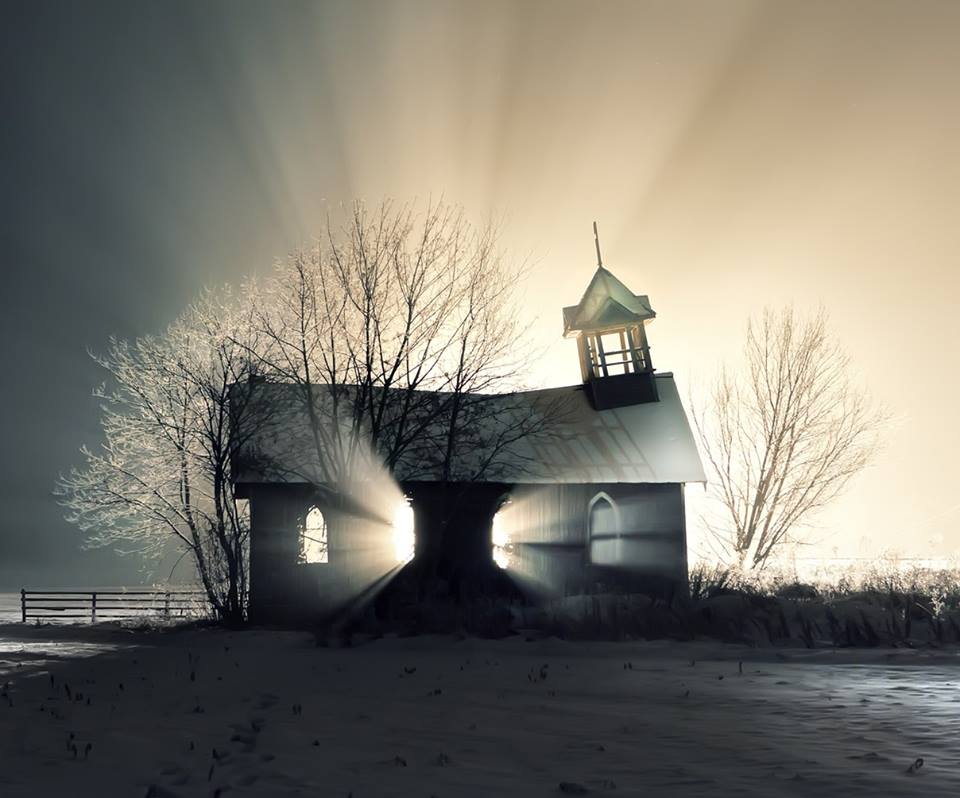
In my continuing search for weird and wonderful images that might help teachers inspire their students to flights of fantasy in their writing, I have just found a truly wonderful one.

There absolutely has to be a story in this image, any red blooded writer would be able to put together at the very least some sort of short story about what on earth was happening in this church out in the middle of nowhere – apparently.

church

Share with us:

Please do come back and let us share whatever this image produces…. I am intrigued to know what young and fertile minds might make of it.

Odd Photos Of Odd People

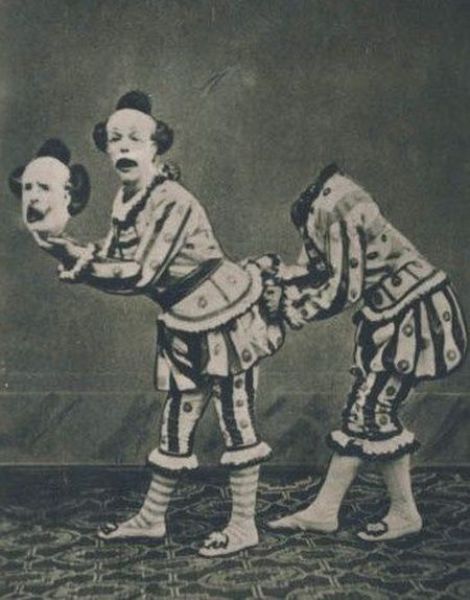
As part of my continuing series of curious images that might be of use to teachers as starting points for creative writing, here are another set of inexplicable and weird images for you to enjoy.

I shan’t attempt to describe what they show, or even to attempt to explain them, as several defy any sort of sane explanation in my view…  But they are all thought provoking which is why I chose them.

So here you go…………….

odd people 05 odd people 04 odd people 03

Continue reading “Odd Photos Of Odd People”

Steve Cutts – A Most Extraordinary Cartoonist

I have just come across the work of Steve Cutts, a very strange but committed cartoonist and animated film maker, whose work shows a very strong involvement with the less attractive sides of our society.

As you will see from the several examples of his work I shall bung up here for you to look at, he is deeply concerned with environmental issues, social problems and the general difficulties of life.

He puts it this way:  I like to make animations about life and society in general, so there tends to be a message in most of them. The general insanity of mankind is an almost endless pot of inspiration!”

I would say that having looked at a large amount of his work, that this is, if anything, an understatement.  His work is totally involved in the problems of the world in one way or another, in a very dry and succinct manner as well.   One is in no doubt as to the message he wishes to impart unto us when looking at any of his drawings or animations.

Anyhow, to whet your appetite, here are a few of his cartoons, and a couple of typical videos.

Cartoons:

cutts04

Continue reading “Steve Cutts – A Most Extraordinary Cartoonist”

Woodford Folk Festival – I Clean Lavatories

A couple of weeks ago Lotty and I spent a strange week working as volunteers at the Woodford Folk Festival, the largest such festival in Australia.   We were two vollies (as they are called here in Australia), among about 3000 others all of whom work their little butts off to make this festival happen.

To be honest, neither Lotty nor I have any great interest in folk music, but many of our friends have worked in this festival for years and had told us it was great fun, and anyhow, it seemed to us to be an essential part of our education in living in Oz, so we signed up as soon as it was possible – about 6 months before the actual festival occurs.

S-Bend Warriors
S-Bend Warriors

One signs on via the web, and all manner of information is required from prospective vollies, among which is the burning question of what sort of work does one wish to do in the festival.  This is accompanied by an imposing list of possible areas of work – publicity, stage hand, selling stuff and so on – we had no idea what we might best do, so we simply selected the “do anything” button, and sat back to wait and see what would happen next.

What happened next was an extremely enthusiastic email from a bloke called Alan who would be our chief for the festival, as we had been placed in one of his teams and would be glorying in the title of S-Bend Warriors.   This meant that we would be one of many teams of Inter-galactic S-Bend Warriors who would be charged with cleaning and provisioning a load of showers/lavatories in one of the many camping areas in the festival.

Continue reading “Woodford Folk Festival – I Clean Lavatories”